
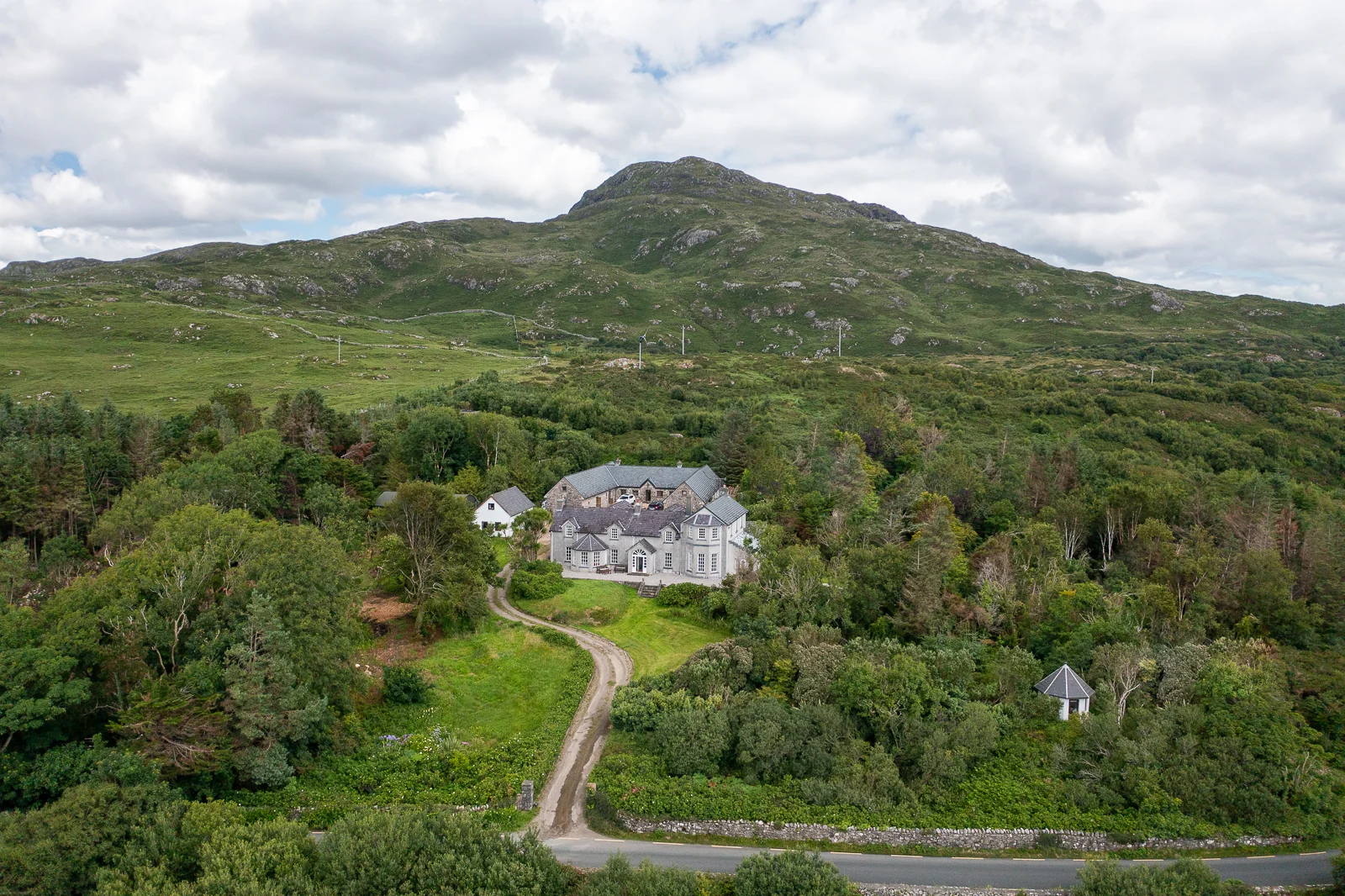
Ted Hughes arrived at Doon House with his partner, Assia Wevill, and their daughter Shura, as well as Frieda and Nicholas, his children by Sylvia Plath, who had taken her own life three years earlier.
A house for self-imposed exile
Hughes and Wevill’s move to Doonreagan was a deliberate retreat: a chance to evade literary London and the corrosive gossip that had followed the couple since Plath’s death. For them both it was an attempt to have something like a normal domestic life together. Very few people knew where they had gone.
Ted seriously considered making Doonreagan their permanent home, though this, sadly, proved impossible and their stay ended after a few months. However, by Hughes’s own account — as recorded in his published letters — it was one of the most productive periods of his writing life. He would conclude many years later, towards the very end of his life, that his time at Doonreagan had offered “a breakthrough in his writing and in everything to do with himself”. In leaving his experience of Connemara behind, he told Nicholas, he had “muffed the best opportunity of his life to enter a wholly richer, more productive and complete existence”. Looking out over the Atlantic and the wild outcrop of rock and peat behind the house, he wrote some of his best-loved poems, such as Skylarks, and he began work on Crow, the verse cycle now regarded as one of his major achievements. Wevill, meanwhile, a successful former copywriter, wrote and painted, while Frieda was of an age to attend the village school in Cashel.
A story rediscovered
The Doonreagan connection remained largely unknown and had no mention in the biographies published so far on Hughes. But in 2005, the current owners, Robert Jocelyn and his wife Ann, received an unexpected visit. A couple researching a biography of Assia Wevill had traced her to their house through letters written from Doonreagan decades earlier. Ann Henning Jocelyn, herself an accomplished writer and for decades inspired by Doonreagan, was intrigued. She began to research Hughes’ and Wevill’s experience, interviewing the few individuals who had known the couple there, such as poet Richard Murphy, painter Barrie Cooke, and Nobel Laureate Seamus Heaney.
The result was Doonreagan, a one-act play portraying the couple’s private hours in the house — the shadow of Plath’s death, and the fragile intimacy of two people trying to start again. It premiered at London’s Jermyn Street Theatre in September 2013, directed by Alex Dmitriev and starring Daniel Simpson and Flora Montgomery. The stage set used furniture original to the house, including the writing desk Robert Jocelyn had kept since acquiring Doonreagan in the late 1960s — the desk Hughes would have used for his writing.
What the critics made of it
London reviewers were struck as much by the setting as by the story. Everything Theatre called it “a one-act play that packs an emotional punch,” while A Younger Theatre singled out the “beautiful isolation of Doonreagan” as a presence in its own right, running through the production via projected landscapes and a soundtrack of sea and sheep. The original reporting on the discovery — first told in The Galway Review — remains the fullest account of how Hughes and Wevill’s brief Irish exile came to light. Three Hughes-inspired conferences were subsequently held at Doonreagan with large numbers of delegates and over a dozen professors of English representing various universities.
Doonreagan today
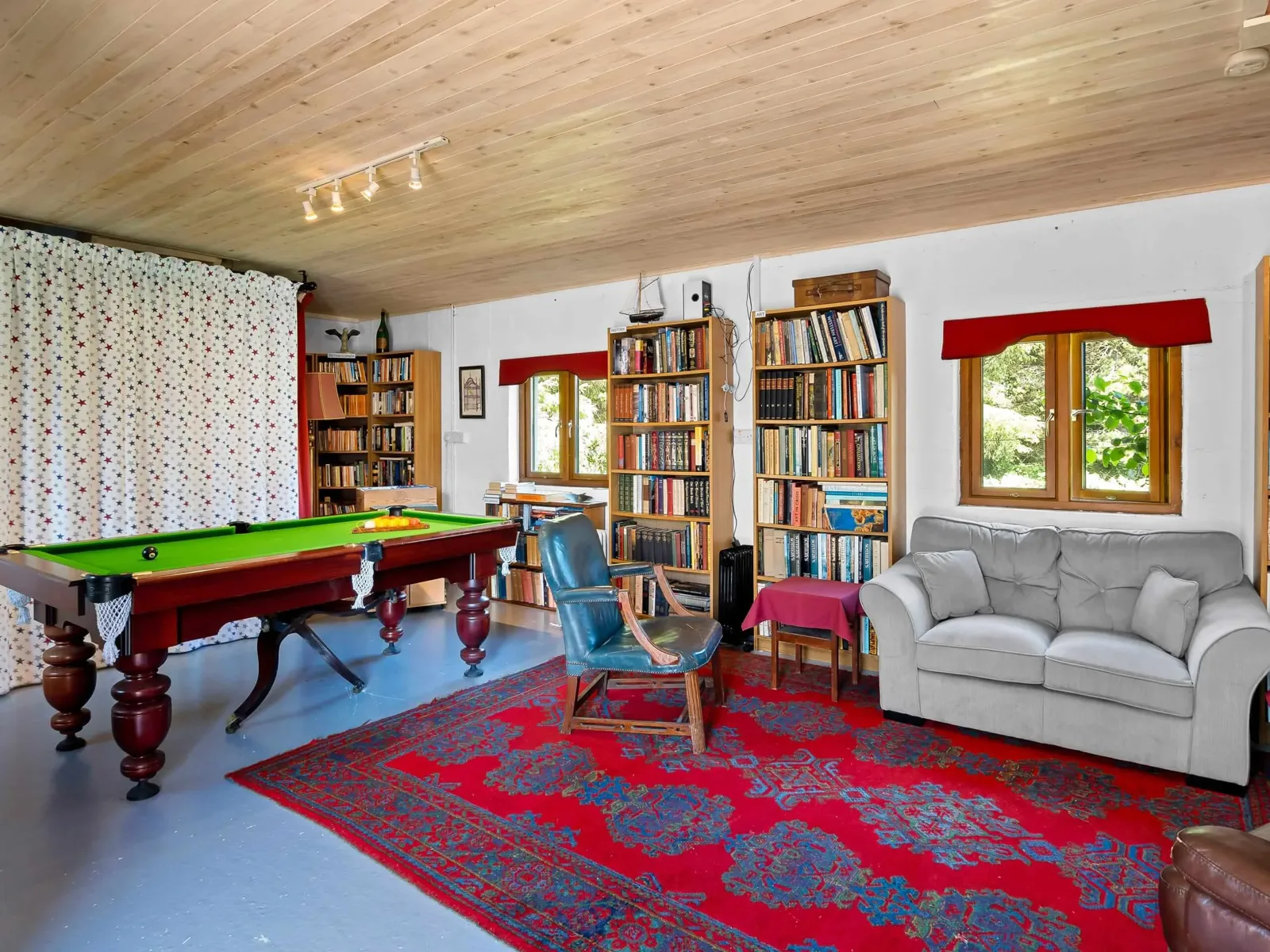
The Games and Reading Room, where the writing desk sits today.
Ted’s desk has long since returned home and now sits, along with thousands of interesting books, in Doonreagan’s Games and Reading Room. In the main house, the view Hughes described in his letters — the daffodils in early spring, Atlantic light changing over Cashel Bay — is the same and can still be watched from the bay windows or the broad terrace in front of the house.
For guests who know their literary history, a stay at Doon House is a chance to spend a week in the same rooms, and under the same wide Connemara sky, that once gave a Poet Laureate the “warm flow of inspiration” he needed to write his way back to work. Read more about the house’s history, or check availability for your own stay.